LG Refrigerator Not Cooling in Sacramento Area: Compressor Replacement
An LG refrigerator that is running but not getting cold can quickly turn into spoiled food and an expensive replacement decision. During this Sacramento-area service call, the refrigerator compartments remained far too warm even though the appliance still appeared to be operating.
Professional testing confirmed that the problem was not a simple temperature setting, door issue, or airflow restriction. The compressor had failed, preventing the sealed refrigeration system from moving heat out of the cabinet. DNAA Appliance Repair replaced the compressor, completed the required sealed-system work, and verified that temperatures began dropping after the repair.
What the Homeowner Noticed
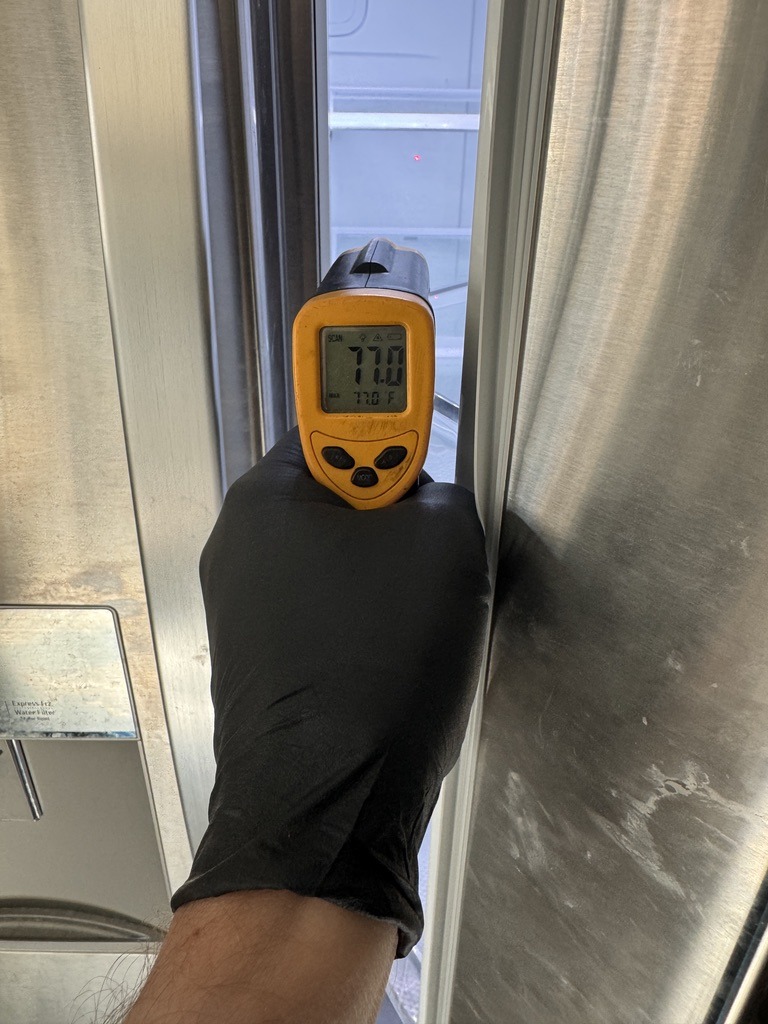
The primary complaint was straightforward: the LG refrigerator was not cooling. Initial surface-temperature readings inside the cabinet were around 77°F, far above normal refrigeration temperature. When a refrigerator remains this warm, food should be moved to a safe refrigerated location while the appliance is diagnosed.
Why an LG Refrigerator May Run but Not Cool
A no-cooling symptom does not automatically mean the compressor is bad. Similar symptoms can be caused by an evaporator fan, condenser fan, defrost problem, sensor, control board, refrigerant leak, airflow restriction, or sealed-system fault. Replacing parts based only on the symptom can waste time and money.
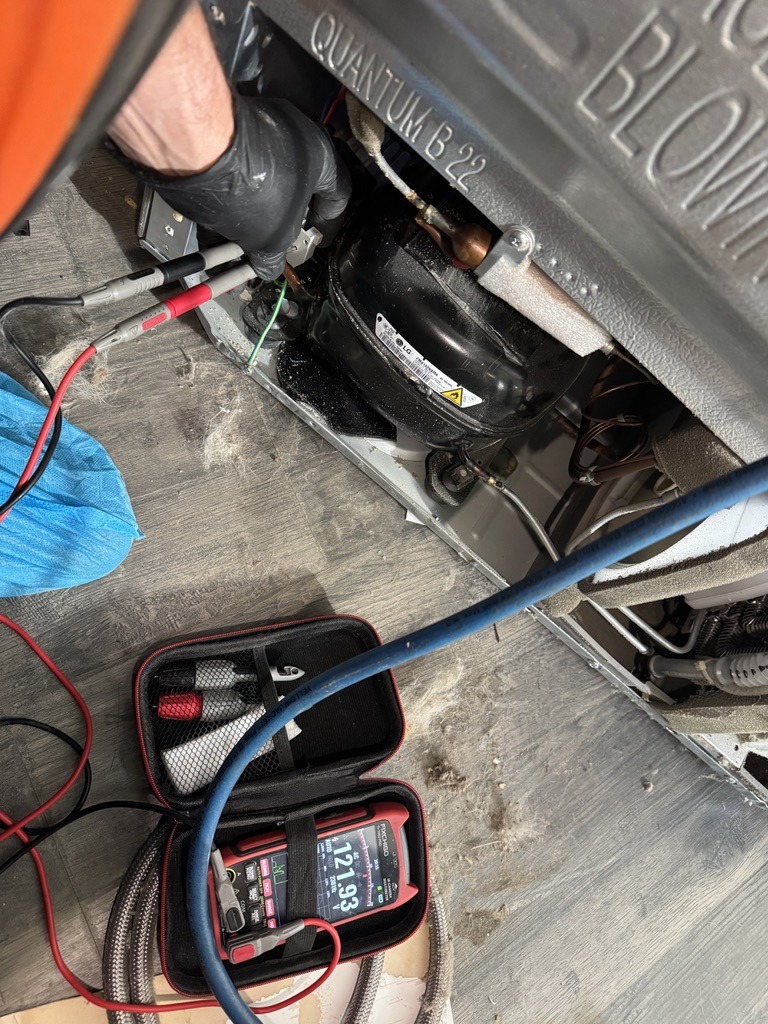
This appliance was an LG LFDS22520S model. The diagnostic process checked operating conditions and compressor performance before the sealed-system repair was recommended. The test results pointed to a failed compressor as the reason the refrigerator could no longer remove heat from the cabinet.
Diagnosis Confirmed a Failed Compressor
The compressor is the heart of the refrigeration circuit. It circulates refrigerant through the condenser, metering device, and evaporator so heat can be absorbed inside the refrigerator and released outside. When the compressor cannot operate correctly, the lights and controls may still work while temperatures continue rising.
LG Compressor and Sealed-System Repair
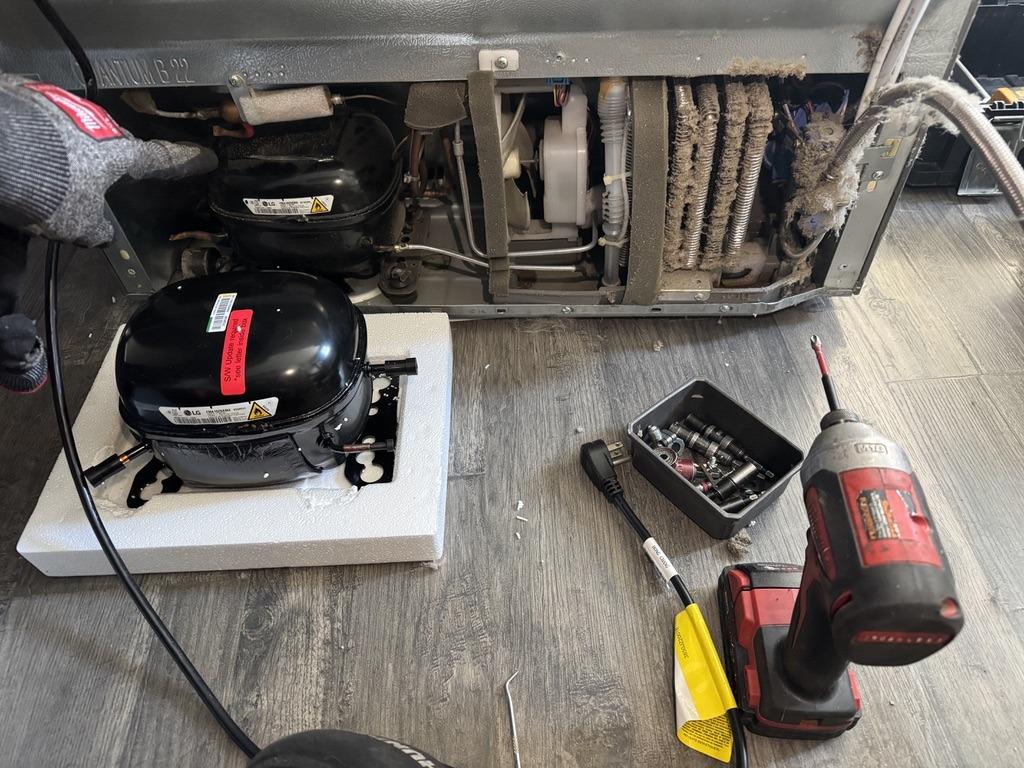
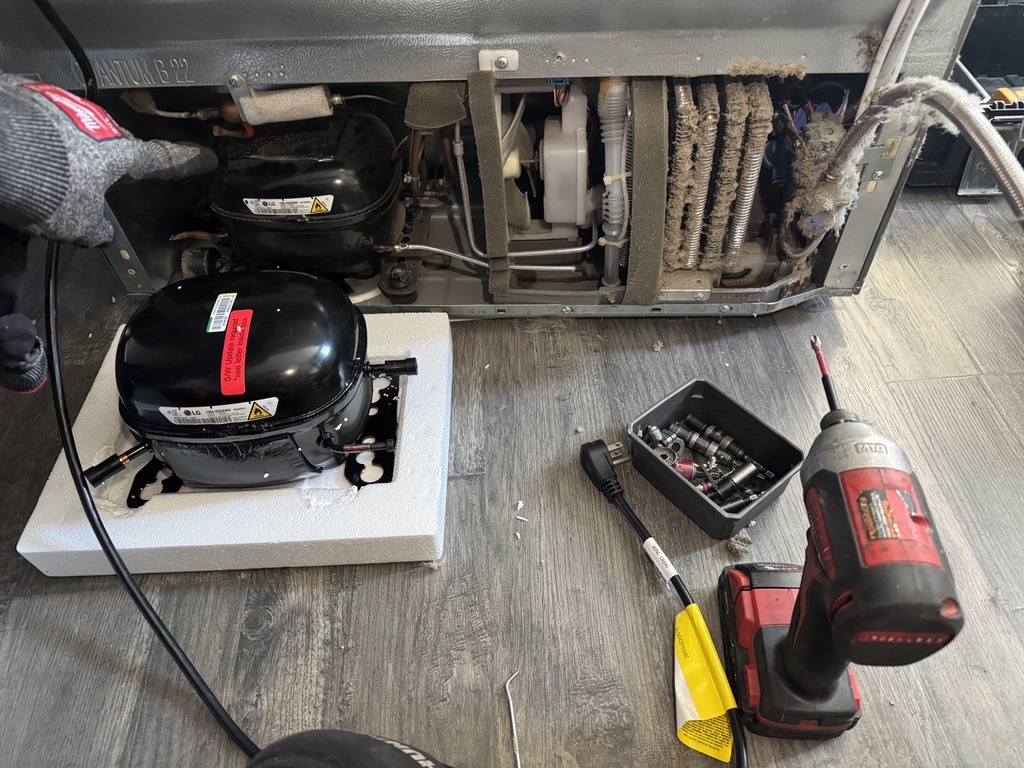
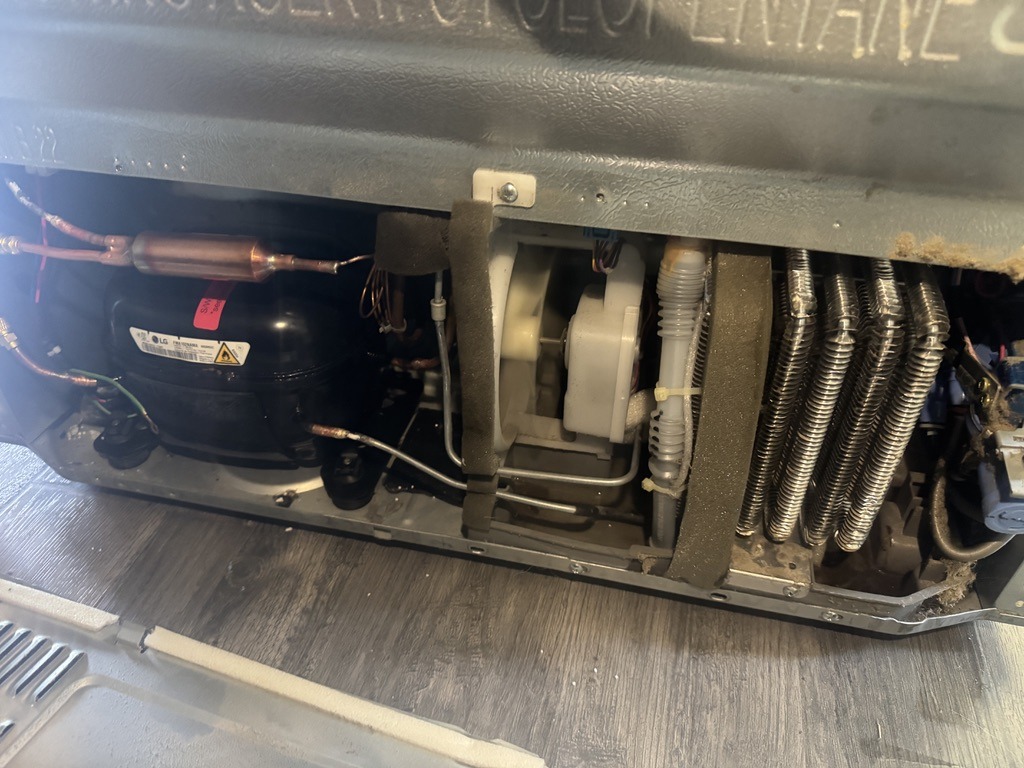
After the failed compressor was confirmed, the old compressor was removed and the replacement unit was prepared for installation. Compressor replacement is more involved than a standard component swap because the refrigeration circuit must be opened and serviced correctly.
The repair included installation of the replacement compressor, sealed-system connections, evacuation, leak and operating checks, and restoration of the refrigerant circuit. These steps are essential: installing a compressor without properly preparing and testing the sealed system can shorten the life of the repair or leave the refrigerator unable to reach the correct temperature.
Cooling Performance After the Repair
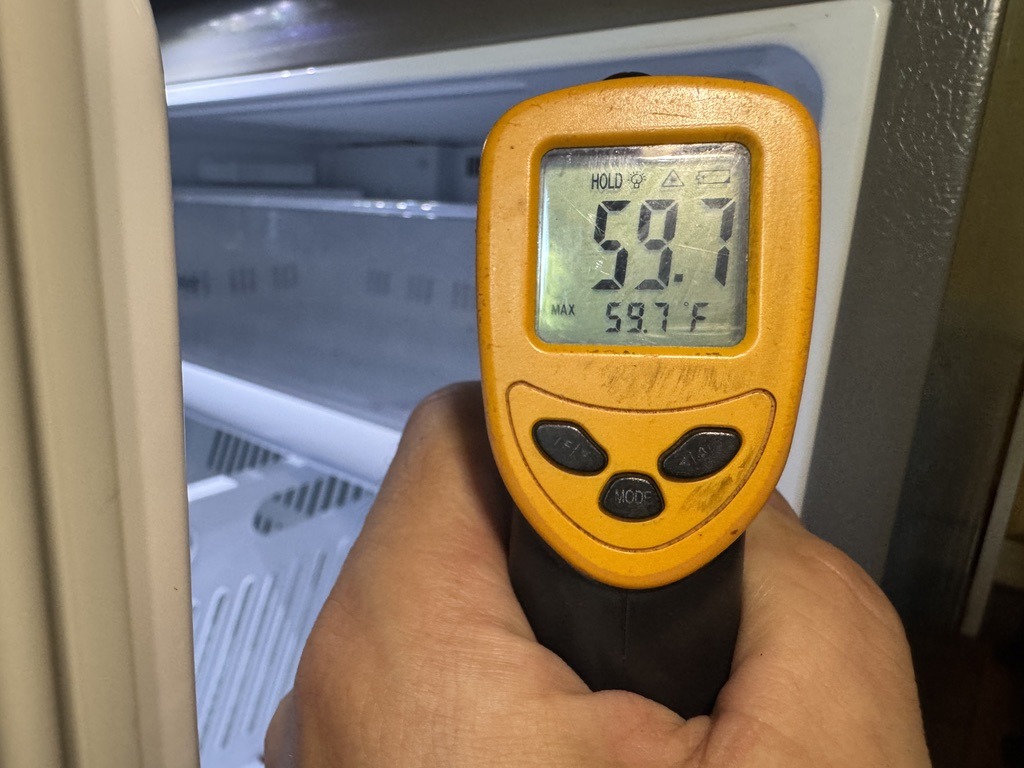
Once the sealed system was restored and the refrigerator restarted, the cabinet temperature began moving downward. An early follow-up reading showed approximately 59.7°F, a clear improvement from the initial reading near 77°F. Refrigerator temperatures do not return to their final set point immediately after major sealed-system work, so the system was allowed to continue operating while cooling performance was monitored.
Is Replacing an LG Refrigerator Compressor Worth It?
Compressor failure does not always mean the entire refrigerator should be discarded. When the cabinet, doors, controls, fans, and interior components remain in good condition, a professional compressor and sealed-system repair can restore the appliance without the expense and disruption of replacing it.
A replacement decision should include more than the advertised price of a new refrigerator. Homeowners may also face delivery charges, installation, haul-away, disposal, water-line work, fit problems, and time spent selecting a comparable model. For a relatively recent refrigerator in otherwise serviceable condition, replacing the failed compressor may offer better overall value.
The correct recommendation still depends on the model, age, condition, parts availability, warranty coverage, and confirmed failure. Our repair-or-replace appliance guide explains how to compare those factors before making a decision.
Signs Your Refrigerator May Need Professional Diagnosis
- The refrigerator and freezer are both getting warmer.
- The appliance runs, but temperatures do not drop.
- Food spoils even though the display shows a normal setting.
- The compressor repeatedly tries to start, clicks, or remains unusually quiet.
- Fans are running, but the cabinet still does not cool.
- The refrigerator stopped cooling after previously operating normally.
These symptoms can have different causes. A technician should confirm whether the fault is in the compressor, sealed system, airflow, defrost system, sensors, fans, or electronic controls before recommending a repair.
LG Refrigerator Repair in the Sacramento Area
DNAA Appliance Repair diagnoses LG refrigerators that are not cooling and performs compressor and sealed-system repairs when the diagnosis and appliance condition support that option. We serve Sacramento and surrounding Northern California communities.
Learn more about our professional refrigerator repair service.
LG Refrigerator Not Cooling?
Start with an accurate diagnosis. DNAA Appliance Repair can identify the failure and explain whether compressor replacement or another repair is the practical solution.