LG Washer OE Error & Not Draining: Sacramento-Area Repair Guide
A washer full of water is a frustrating place for laundry day to stop. If your LG washer will not drain—or displays an OE error—the next step is to find out what is stopping the water from leaving, not automatically order a pump.
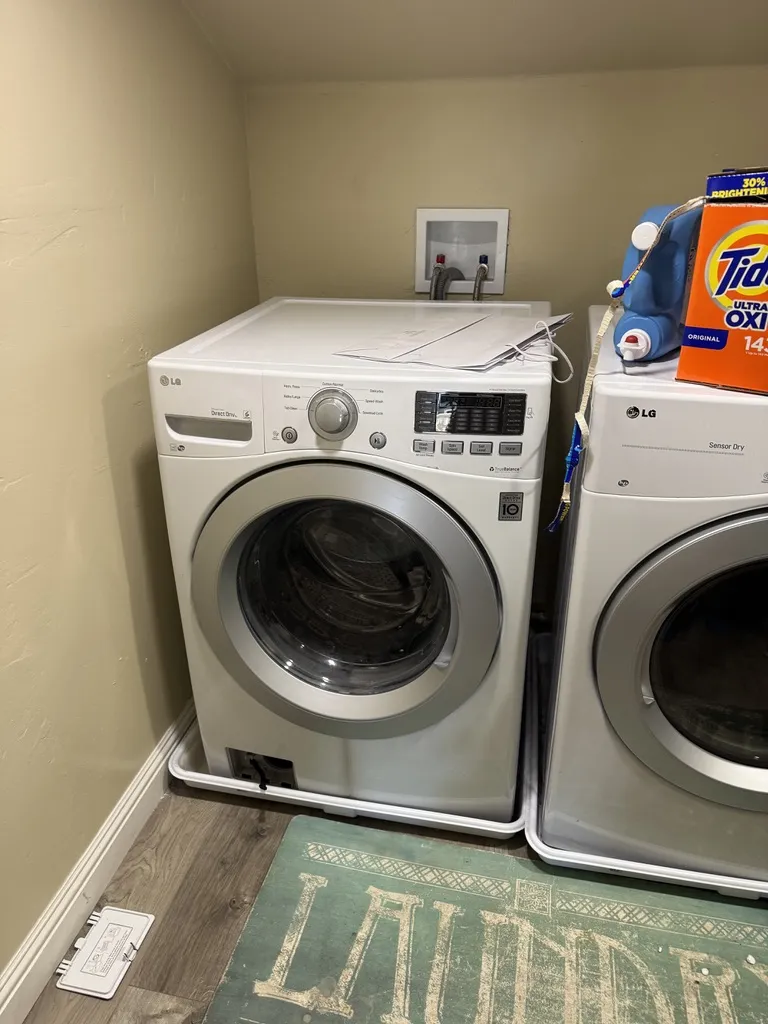
DNAA Appliance Repair handles drainage complaints across Sacramento and nearby communities. The original photographs in this guide come from an LG front-load washer service involving a failed drain pump and its replacement. They show access to the pump and the removed component.
What Does the OE Error Mean on an LG Washer?
LG identifies OE as a drainage error: the washer is unable to drain properly. A restricted hose or a clogged drain pump filter can cause it. A failed pump is another possibility, but the code alone does not establish which part needs replacing. See LG’s official front-load washer OE guidance for the manufacturer’s explanation.
Why a Drain Problem Can Look Like a Spin Problem
Water left in the drum can leave clothes soaking wet and interrupt the expected progression to the final spin. That is why a “washer not spinning” complaint sometimes leads to the drainage system rather than the drive motor.
Other spin problems have different causes. Imbalance, door-lock faults, and drive issues require their own diagnosis. The useful question is what the machine is doing when it stops: is water still inside, can you hear a pump attempt, and does the fault return after another cycle?
A Clogged Filter and a Failed Pump Are Not the Same Repair
The filter catches debris, while the pump moves water through the drain path. Coins, lint, or other material can restrict drainage; a kink or blockage farther along the path can also interfere. If the path is clear but the pump cannot perform its job, pump replacement may be appropriate.
A pump noise is a clue, not a complete test. Humming does not prove that water is moving properly, and a quiet pump does not automatically prove that its motor is defective. Proper diagnosis considers the drain path, the pump, and the relevant electrical controls.
Inside a Real LG Drain Pump Repair
The photographs show the front panel removed to reach the lower pump area. In this repair, the drain pump was identified as faulty and replaced. The removed pump is shown close up.
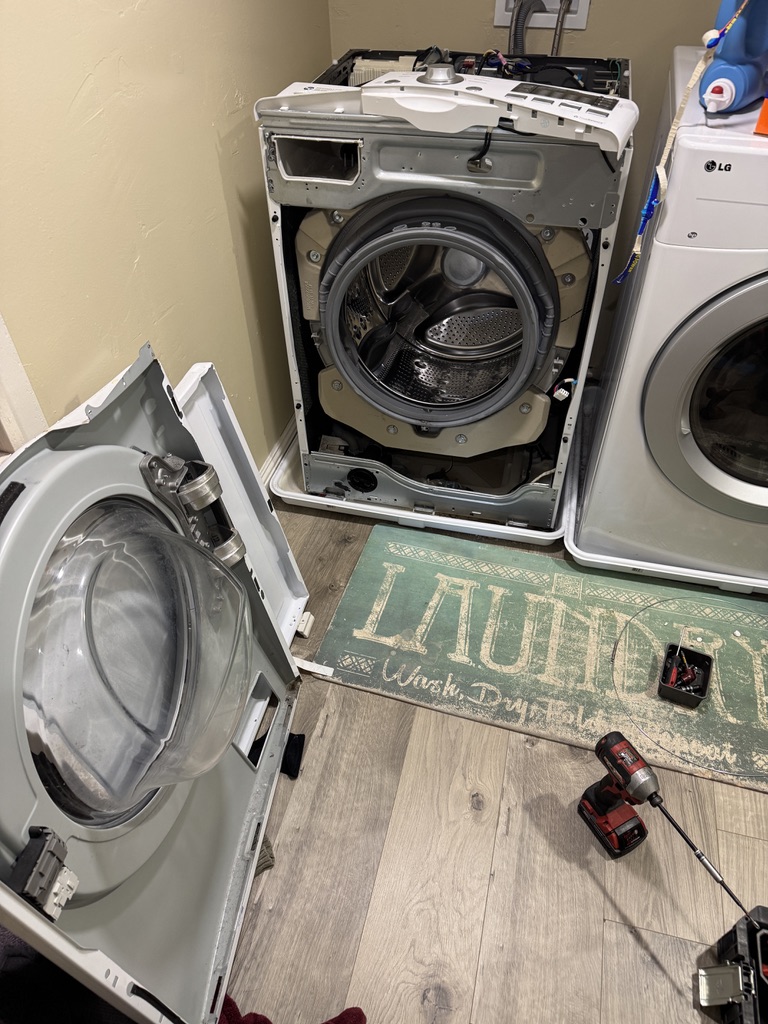
The washer opened for access to the drain-pump area.
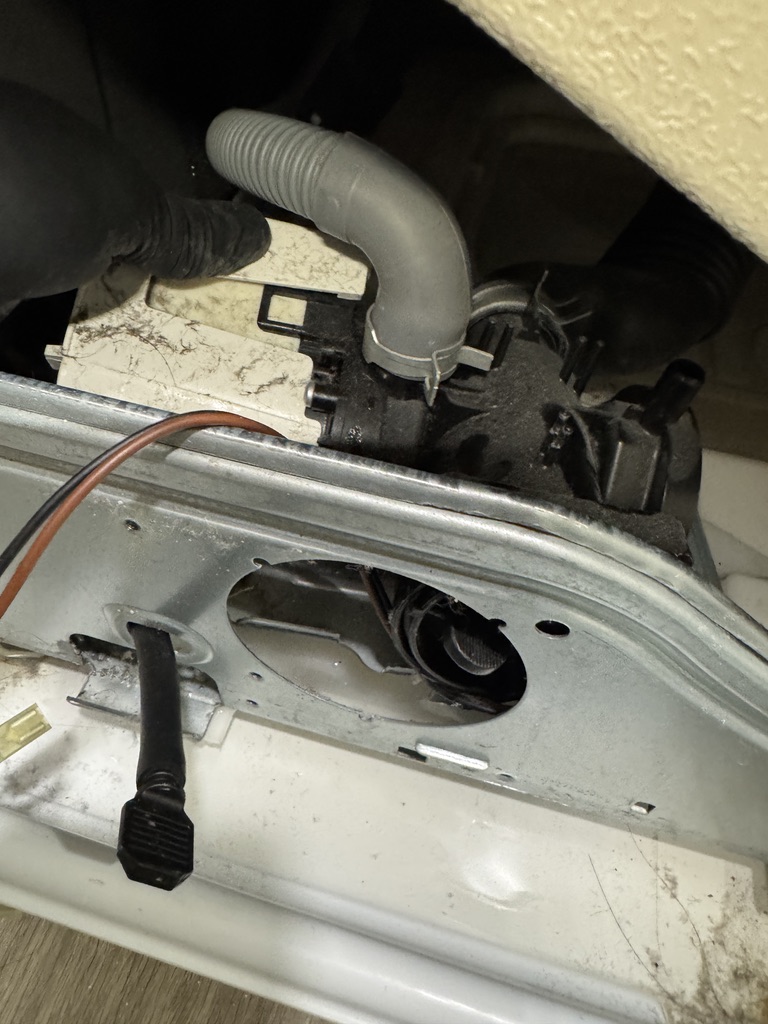
Accessing the pump assembly inside the cabinet.
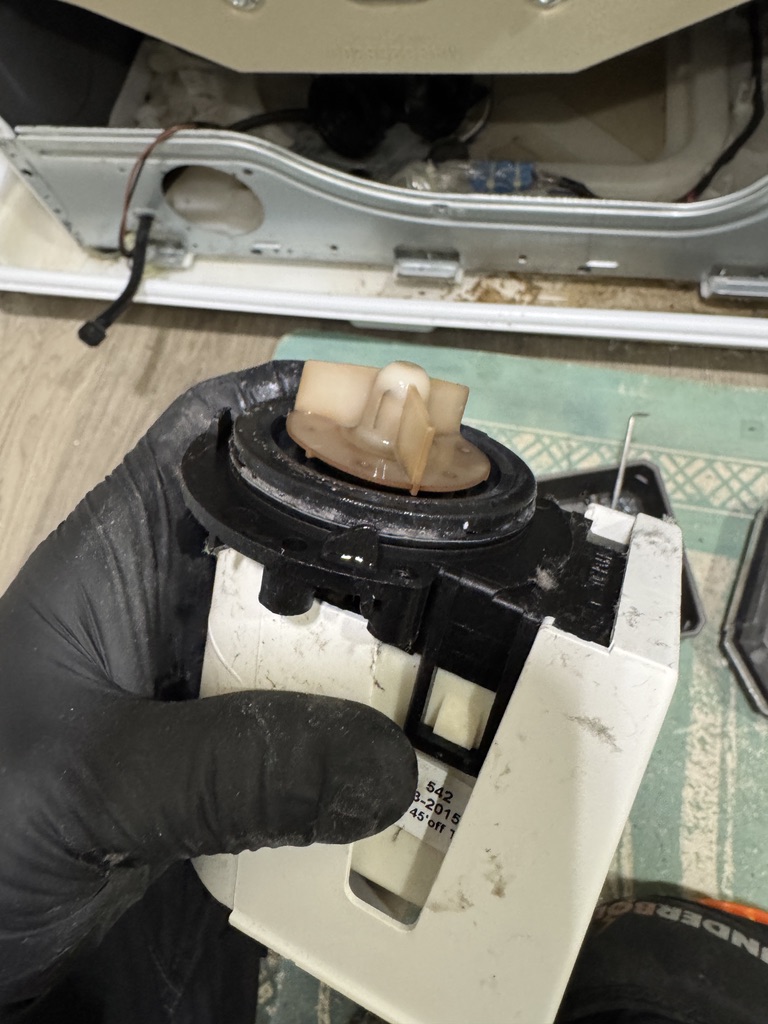
The faulty drain pump removed during service.
A component can fail without looking dramatically broken in a photograph. The decision to replace it should come from diagnosis, not from how impressive the damaged part looks on camera. Your washer does not have to produce a cinematic breakdown to need a repair.
What Can You Safely Check Before Calling?
Start with the instructions for your exact model. From outside the appliance, look for an accessible drain hose that is visibly crushed or kinked, without pulling heavy equipment or disturbing electrical connections. Note the displayed code and whether water remains in the drum.
Some LG front-load models have a user-accessible pump filter and emergency drain hose. Do not open the filter cap while the tub is full: water can escape rapidly and may be hot. If your manual describes user cleaning, turn the washer off, disconnect power safely, allow hot water to cool, and follow its controlled draining instructions before opening the filter. If you are unsure, leave this to a technician.
Do not assume every LG washer has the same filter access. Do not force a locked door, bypass safety devices, or attempt live electrical testing. If water has reached electrical parts, avoid contact and seek professional help.
When Cleaning Is Not Enough
Arrange service when the error returns after the model-appropriate checks, the washer still holds water, the pump makes an unusual noise, or there is a leak. Repeatedly restarting the machine is not a substitute for finding the restriction or failed component.
After a drainage repair, useful verification includes observing drainage, checking the serviced connections for leaks, and confirming that the washer can progress through the relevant cycle. These checks help establish whether the drainage problem has actually been resolved.
Do You Need a New Washer—or a Targeted Repair?
A drainage failure does not automatically mean the entire washer needs replacing. Overall condition, the diagnosed fault, parts availability, and the repair estimate should guide the decision. Our repair-or-replace appliance guide explains the comparison.
For another drainage diagnosis, read our Maytag washer drain-pump repair in Fairfield. If the machine drains but repeatedly goes out of balance during spin, our Samsung suspension repair case illustrates a different cause.
LG Washer Repair Across Sacramento & Nearby Communities
DNAA Appliance Repair serves Sacramento, Rancho Cordova, Citrus Heights, Elk Grove, Folsom, Davis, Woodland, Winters, Dixon, Fairfield, Vacaville, Suisun City, Napa, and surrounding communities. Contact us to confirm service availability at your address.
DNAA Appliance Repair
Is your LG washer holding water, showing OE, or leaving laundry too wet to finish? Tell us the model, the code if one is displayed, and what happens during draining. We can assess the cause and explain the appropriate repair instead of guessing from the code alone.
Explore Washer Repair & Request Service | Call (916) 232-3152
Real repair cases. Hands-on diagnostics. Practical repair options.