Samsung Ice Maker Frozen Up? Ice Bucket Stuck and Not Making Ice
A practical DNAA repair guide for Fairfield and nearby Northern California communities, illustrated with our field-service photos from Samsung refrigerators.
A Samsung refrigerator that stops making ice can turn a simple drink into a troubleshooting project. When the ice bucket also refuses to come out, the answer is not to pull harder. Ice buildup, a sealing problem, or a damaged component may need attention before normal ice production can return.
Here we explain the frozen ice-maker problem, what a displaced lower cover can mean, and why an effective repair starts with finding the cause—not just melting the ice.
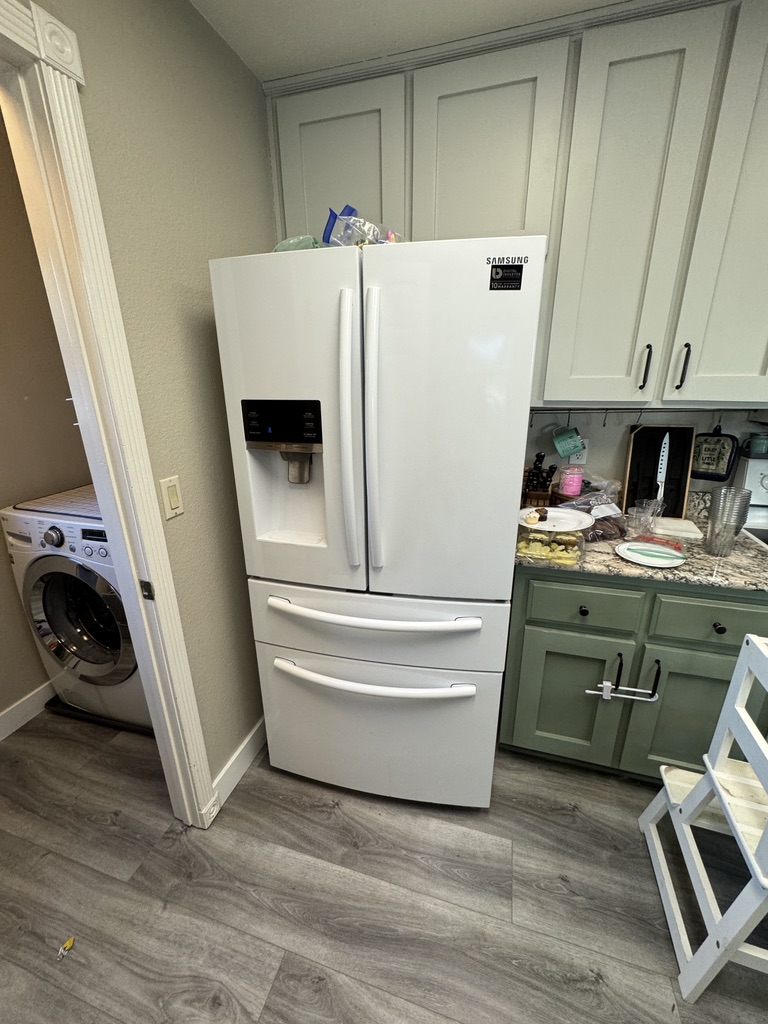
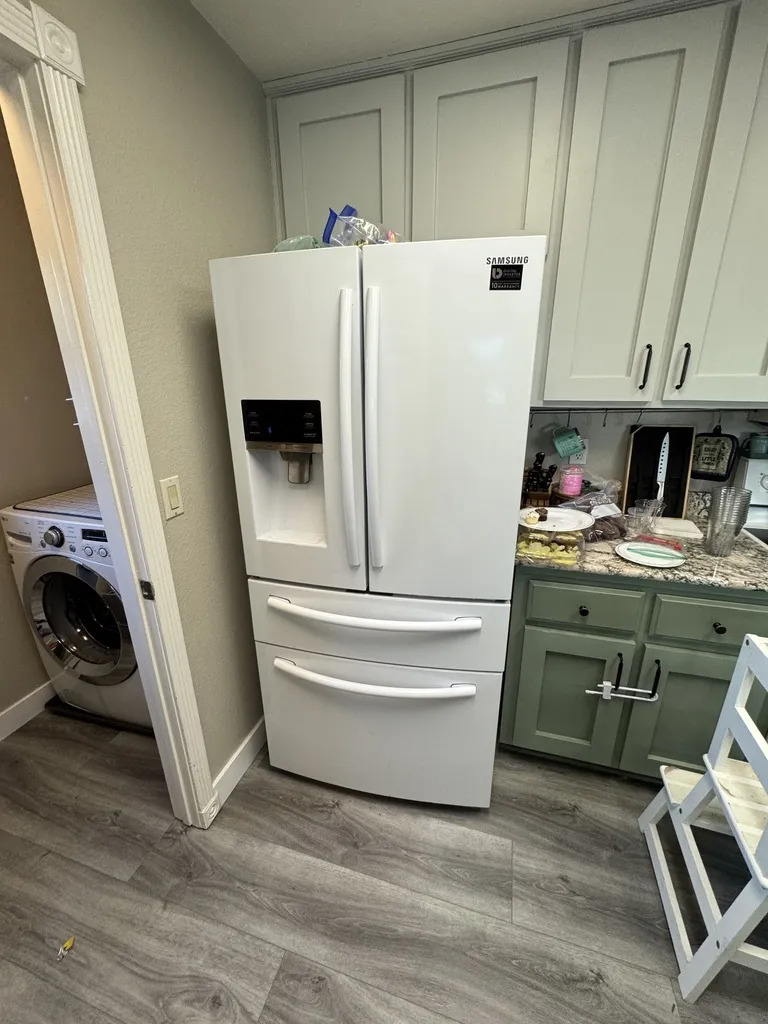
Samsung French-door refrigerator with an ice maker inside the fresh-food compartment. Photos in this guide show examples from more than one Samsung model, not a single before-and-after repair.
Samsung refrigerator not making ice—or just not dispensing it?
These are different complaints. If the bucket contains ice but nothing comes through the door, the dispenser, auger, chute, or clumped ice may be involved. If no new cubes are being produced, the ice-making system, water supply, temperatures, and controls need checking. A bucket frozen in place can complicate either situation.
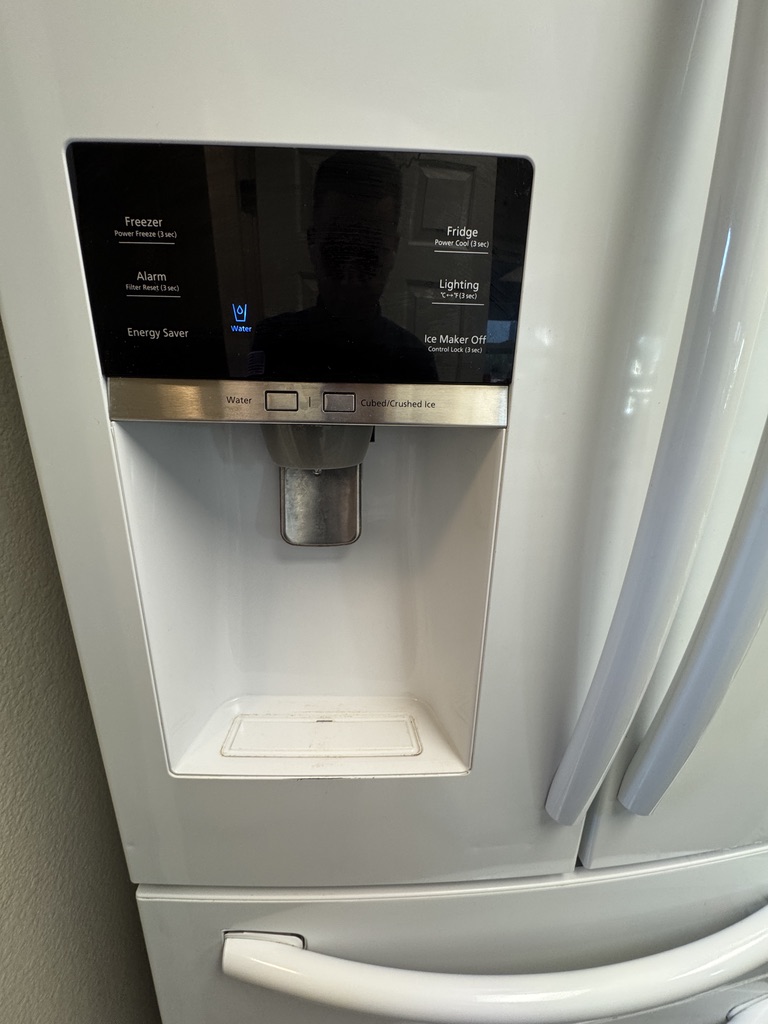
The dispenser controls are a starting point for checking settings—not proof of a failed ice maker.
Before arranging service, confirm that ice production is enabled using the instructions for your model. Note whether water dispenses, whether there are any error codes, and whether the refrigerator or freezer is also warmer than usual. Those details help narrow the diagnosis.
Why the ice maker can freeze up inside the refrigerator
On these Samsung designs, the ice-making assembly sits inside an insulated ice room within the fresh-food compartment. That ice room must stay colder than the surrounding refrigerator space. If relatively warmer, moisture-bearing air enters through a sealing defect, moisture can condense and freeze on cold surfaces.
Over time, frost and ice can interfere with bucket removal, moving parts, airflow, or ice-level sensing. Water entering in the wrong place can also freeze where it should not. The technician needs to distinguish an air-sealing problem from a fill-water problem, damaged parts, or a cooling or control fault.
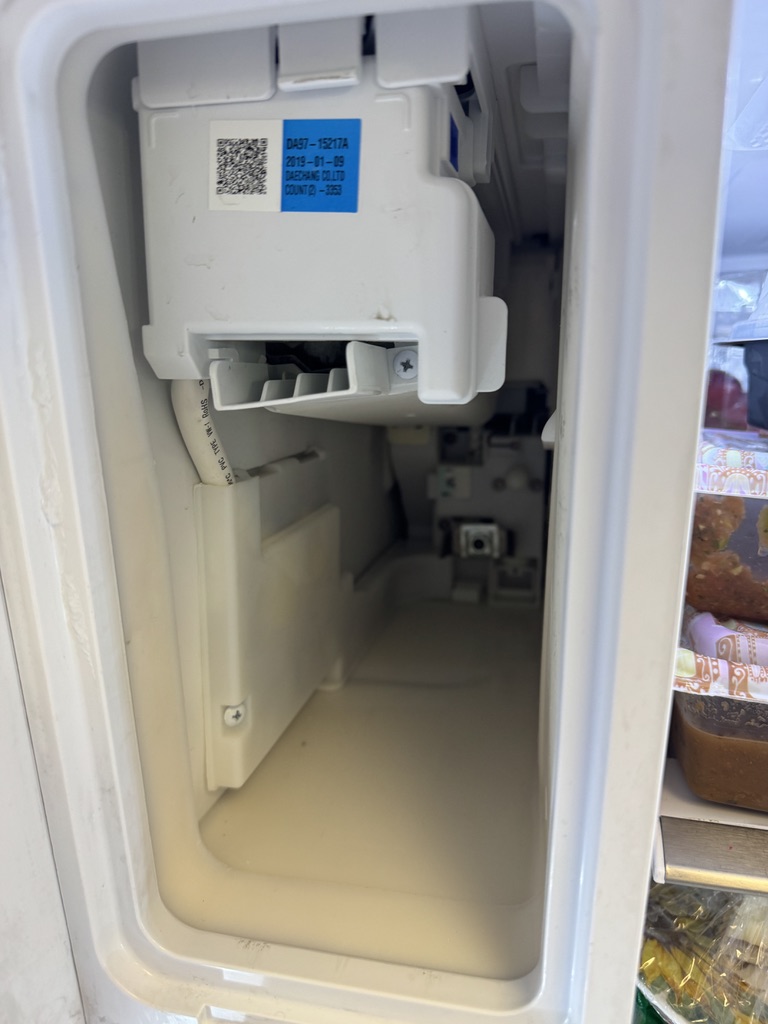
A view of the ice-making assembly with the bucket removed on one photographed model. Access and component layouts vary by model.
A leaking dispenser flap or a bucket that does not seat correctly is another possible entry point for unwanted air. Not every Samsung with no ice has the same failure, and a frost complaint alone does not establish a manufacturing defect.
Ice bucket stuck? Do not turn removal into a strength test
The reported complaint in these field examples included a bucket that would not come out. Ice can hold a bucket in place, but damaged or misaligned plastic can also interfere with removal. Follow the model-specific release instructions and stop if the bucket resists normal removal.
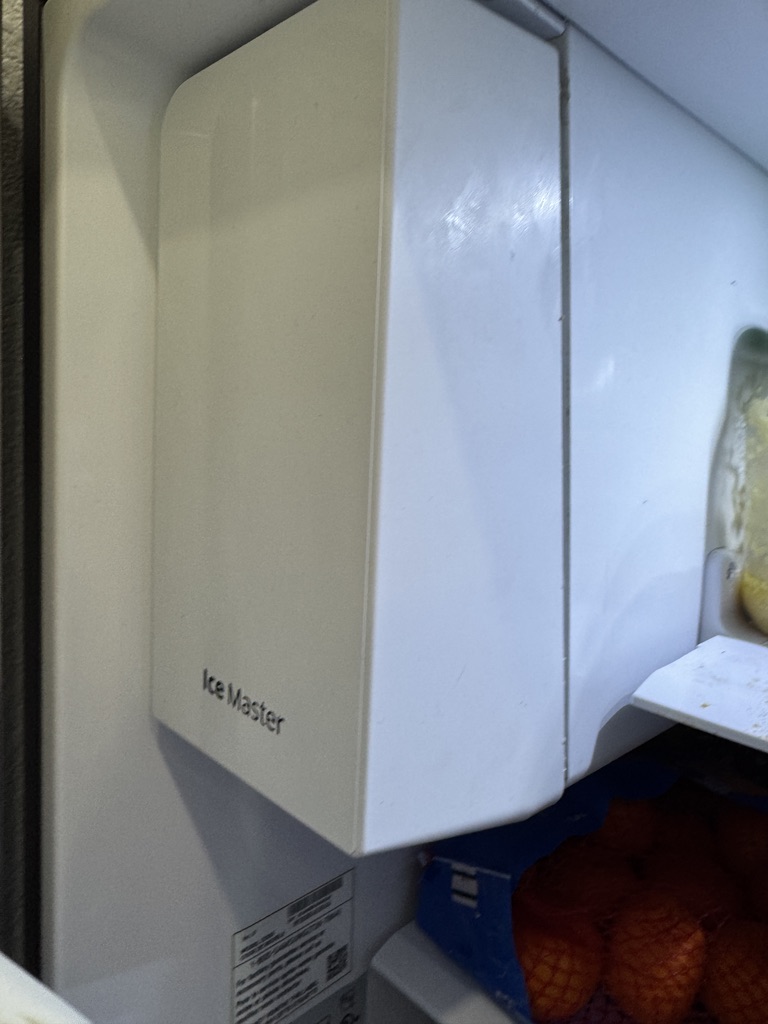
The Ice Master bucket installed in its compartment. A stuck bucket should be inspected rather than forced out.
Do not pry with a screwdriver, chip at the ice with a sharp tool, or use a hair dryer or heat gun. Those approaches can damage plastic, wiring, or nearby components. Samsung advises against forcing a frozen bucket and against using a hair dryer to accelerate defrosting. A planned defrost may allow access, but it does not identify why ice accumulated.
The lower cover matters, too
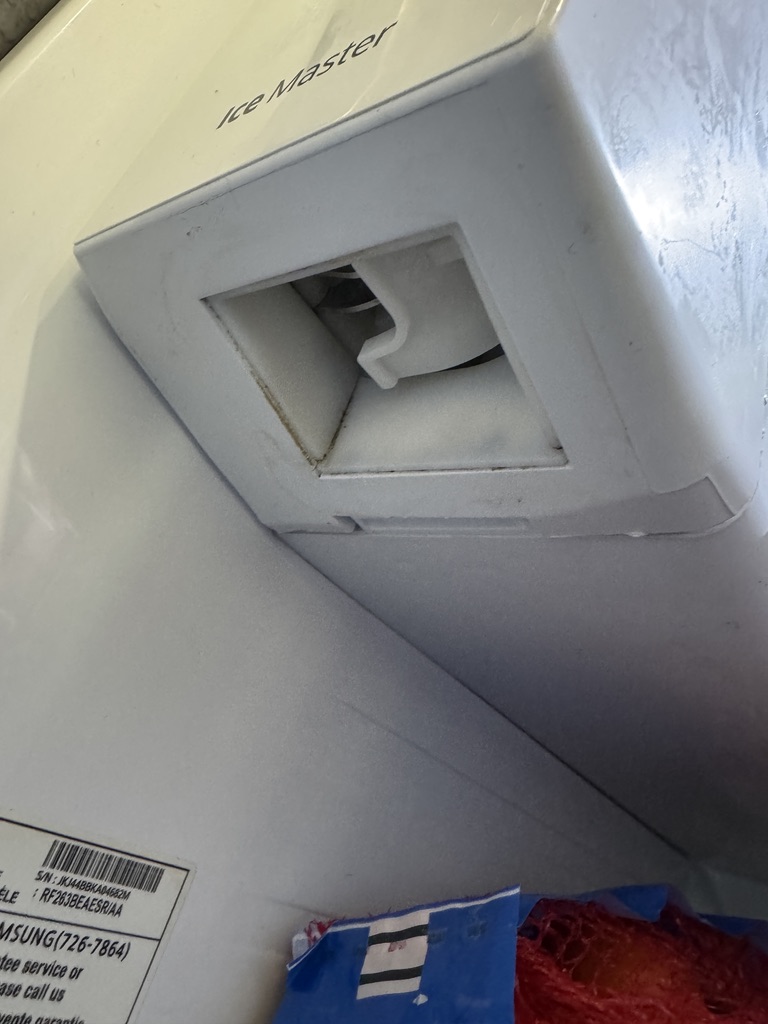
The lower cover around the heater area appears displaced, with a visible edge gap. This is a separate photographed example for inspection—not proof that the heater itself has failed.
The lower cover in this example is visibly out of alignment. Our technician identified it as the cover around the heater area. That calls for checking the cover, its mounting points, surrounding seals, and whether the assembly can fit correctly. A gap in a photograph does not, by itself, establish the exact air-leak path or the reason the plastic moved.
Simply pushing a damaged cover back into place may not be an adequate repair. A technician should determine whether the cover can be correctly secured or whether a damaged component or assembly requires replacement. The heater and related wiring should be assessed separately when the diagnosis calls for it.
What a proper Samsung ice-maker repair may involve
The repair depends on the full model number, production revision, and actual findings. A professional assessment may include:
• Safely gaining access and documenting where frost or solid ice has formed.
• Checking bucket seating, the dispenser flap, housing joints, and applicable seals.
• Inspecting the fill tube and water delivery for misdirected filling, overflow, or leakage.
• Checking the ice-maker mechanism, ice-level sensing, temperatures, and relevant controls.
• Reviewing model-specific service instructions and any applicable updated parts or control procedures.
Depending on those findings, work may include replacing a damaged ice-maker assembly, correcting a water-fill issue, or sealing designated joints with the material specified for that appliance. Where a manufacturer procedure calls for a control update or revised component, compatibility must be confirmed first. A reset is not the same thing as a firmware update, and not every model needs either.
This is not an invitation to coat every gap with household silicone. The correct material and application points matter; drains, vents, moving parts, and service access must remain unobstructed.
Why defrosting alone may not be enough
Removing ice can free a bucket and restore access. If the original sealing, filling, or component problem remains, however, the ice may return. A lasting repair aims to correct the diagnosed fault and then verify operation. The ice room should make cubes—not audition for a miniature glacier.
After service, allow the recovery time specified for the model and verify new ice production, normal bucket fit, and absence of abnormal water leakage.
Frequently asked questions
Can the refrigerator cool normally while the ice maker has a problem?
Yes. An ice-room or ice-maker fault can occur without an obvious loss of fresh-food cooling. Temperature checks still belong in the diagnosis.
Does a stuck bucket mean the entire refrigerator needs replacing?
No. Ice buildup or a repairable component problem may be responsible. Inspection should come before deciding between repair and replacement.
Will a reset fix a frozen ice maker?
A reset cannot repair a distorted cover, an air leak, or a water-fill fault. Use only the reset procedure for your model, and do not force a stuck bucket just to reach the test button.
Does every Samsung need the same ice-maker repair kit?
No. Parts and procedures vary with model and revision. A kit or control update should be selected only after checking applicability.
Manufacturer guidance and related repair articles
Samsung: ice maker not working
Samsung: frost in the refrigerator or ice bucket
Samsung: safely handling a stuck ice bucket.
Samsung refrigerator water-leak repair
Repair or replace an appliance? A practical guide.
DNAA Appliance Repair — Samsung ice-maker help in Fairfield
Samsung refrigerator not making ice, an Ice Master bucket stuck in place, or ice buildup that keeps returning? DNAA provides refrigerator repair and diagnosis in Fairfield and across our Northern California service area. Send us your model number and describe the symptoms so we can help identify the right next step.
Serving Fairfield, Vacaville, Dixon, Winters, Davis, Napa, Sacramento, Rancho Cordova, and nearby communities. Contact us to confirm availability at your address.
Call DNAA: (916) 232-3152
Real repair photos. Hands-on diagnostics. Practical repair options.