Repair or Replace Your Appliance? Why a Good Older Appliance May Be Worth Keeping
Before you send a dependable appliance into retirement, find out what actually failed. Sometimes the smartest upgrade is a targeted repair—not a new delivery date.
Your refrigerator stops cooling. Your washer will not spin. Your dryer tumbles a load of towels that somehow comes out just as damp, only more disappointed.
It is easy to assume an older appliance has reached the end of its useful life. But a breakdown is a symptom, not a verdict. A worn belt, failed heating element or faulty electronic component can interrupt an otherwise serviceable machine.
At DNAA Appliance Repair, our approach is straightforward: identify the problem, consider the condition of the appliance and explain the repair option before you decide what comes next. Keeping a good machine can make practical and financial sense. Replacing a machine with extensive damage can make sense, too. The important part is knowing which situation you actually have.
The short answer: Repair deserves serious consideration when the fault is isolated, the rest of the appliance is in sound condition and the cost compares favorably with a suitable replacement—including installation. Replacement deserves consideration when safety, extensive wear, repeated failures, unavailable parts or your household’s needs make repair a poor fit.
Are older appliances really better than new ones?
Some older appliances are worth preserving because of their construction, serviceable design, familiar controls or years of dependable performance. If you already own a machine that fits your home and does its job well, those are real advantages—not just nostalgia.
But “older” is not a quality certification, and “new” is not a warning label. Design and durability vary by brand, model, generation and maintenance history. Some newer appliances offer valuable improvements in efficiency, capacity, accessibility and everyday convenience.
The useful question is not whether every old appliance beats every new one. It is whether your current appliance, after a sensible repair, remains a good choice compared with the replacement you would actually buy.
There is also a practical advantage to a machine you know. You know whether its refrigerator shelves work for your groceries, whether its washer handles your loads and whether its oven suits the way you cook. Replacing it means evaluating those details again. That does not make replacement wrong; it makes keeping a good fit worth considering.
One failed part does not mean the whole appliance is worn out
An appliance is a collection of systems. A failure in one system can stop the entire machine, even when other major components remain serviceable. A dryer that does not heat does not automatically need a new motor. A refrigerator with a compressor that will not start does not automatically need a compressor.
Similar symptoms can also have different causes. A washer that will not spin could have a drive, drain, lid-lock, control or other problem. A refrigerator that is not cooling could have an airflow, control, starting or sealed-system issue. The symptom alone does not tell you which part to buy—or whether buying a replacement appliance is justified.
That is the practical value of diagnosis: it can separate a repairable fault from an expensive assumption. A diagnosis does not promise a cheap fix. It gives you a better basis for the decision.
Compare repair with the full replacement cost—not just the sale price
A repair estimate and an appliance’s advertised price are not always an apples-to-apples comparison. The relevant replacement is one that offers comparable capacity, fit and features, delivered and ready to use in your home.
Depending on the appliance and installation, your replacement budget may also need to include delivery, removal of the old unit, installation labor, required hoses or connection kits, and any necessary electrical, plumbing, venting or cabinetry work. Confirm which items the seller includes rather than assuming they are all extra—or all included.
Built-in refrigerators and ovens deserve particular attention. A new unit that looks suitable online may have different cutout dimensions, clearances or installation requirements. A targeted repair may preserve a fitted installation without starting a small kitchen project you never intended to have.
The hidden cost of replacement: your time
Replacing an appliance is not just a purchase. It can mean hours comparing brands, reading reviews, checking dimensions, deciding which features you actually need and finding out whether the model you want is available. Then come delivery arrangements, installation, removal and disposal of the old appliance—and sometimes more than one appointment to coordinate.
Will it fit through the doorway? Will the doors open properly in the space? Are the connections suitable? Is haul-away included, and what must be disconnected beforehand? These are reasonable questions to settle before ordering, not surprises you want on delivery day. A new refrigerator should not arrive with an unexpected side order of kitchen remodeling.
When your existing appliance already fits, meets your needs and has a repairable fault, a targeted repair may let you avoid much of that shopping and coordination. That convenience has value, even though it will not appear on a store’s price tag. Repair timing still depends on the diagnosis, parts and schedule; it is not automatically faster than every replacement.
Before you spend a weekend shopping for a replacement, find out whether you need one. Call (916) 232-3152 or request an appliance diagnosis. Understanding the fault and proposed repair cost gives you a practical starting point—not a commitment to replace a machine that may still be worth keeping.
Before deciding, ask for two clear numbers: the proposed repair cost, with its scope and warranty terms, and the total installed cost of a genuinely suitable replacement. Then weigh condition, uncertainty, efficiency and convenience alongside those numbers.
When repairing an older appliance often makes sense
- The problem is isolated. Diagnosis points to a specific fault rather than widespread deterioration.
- The appliance otherwise meets your needs. Its performance, capacity and layout worked well before this breakdown.
- The remaining condition supports the investment. The structure and other relevant systems do not show significant additional concerns.
- Appropriate parts or a suitable component repair are available. The repair can be performed properly, without bypassing safety protections.
- The cost is reasonable relative to the alternatives. A comparable installed replacement would require a substantially different investment.
None of these points guarantees how long the appliance will last. Repair addresses the diagnosed fault; it does not turn every existing part into a new one. A professional recommendation should acknowledge that distinction.
When replacement may be the better investment
Repair is not a contest to keep every machine alive at any price. Replacement may be more practical when several major systems need work, structural corrosion or damage is extensive, suitable parts cannot be sourced, or repeated unrelated failures have made ownership inconvenient and costly.
It may also be the right choice when your needs have changed. A larger household, accessibility requirements, a remodel or a strong opportunity to reduce operating costs can change the comparison even if a repair remains technically possible.
If the appliance may be covered by a manufacturer warranty, service plan or safety recall, check that route before authorizing paid work. Search the exact model through the U.S. Consumer Product Safety Commission’s recall database and follow the applicable manufacturer instructions.
Repair or replace by appliance type
Refrigerators and freezers: do not diagnose the compressor by guesswork
When a refrigerator stops cooling, the immediate concern is food—not appliance shopping. Arrange diagnosis promptly and protect temperature-sensitive food. A no-cooling complaint can involve controls, fans, defrost operation, starting components or the refrigeration system. Those are very different repair situations.
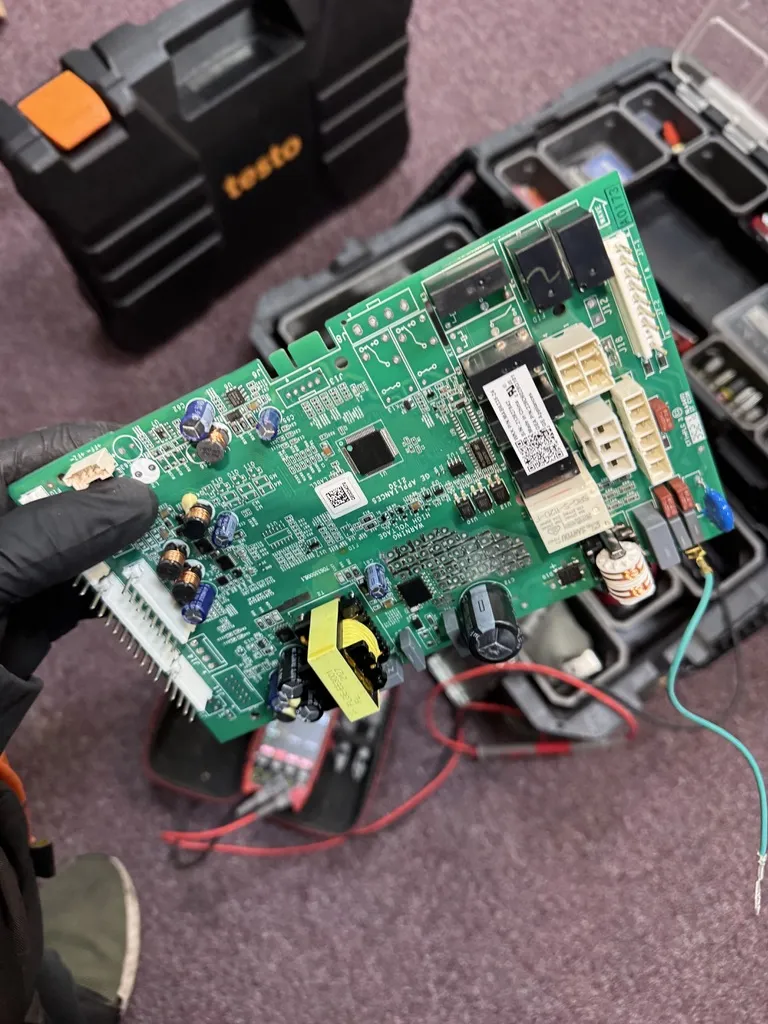
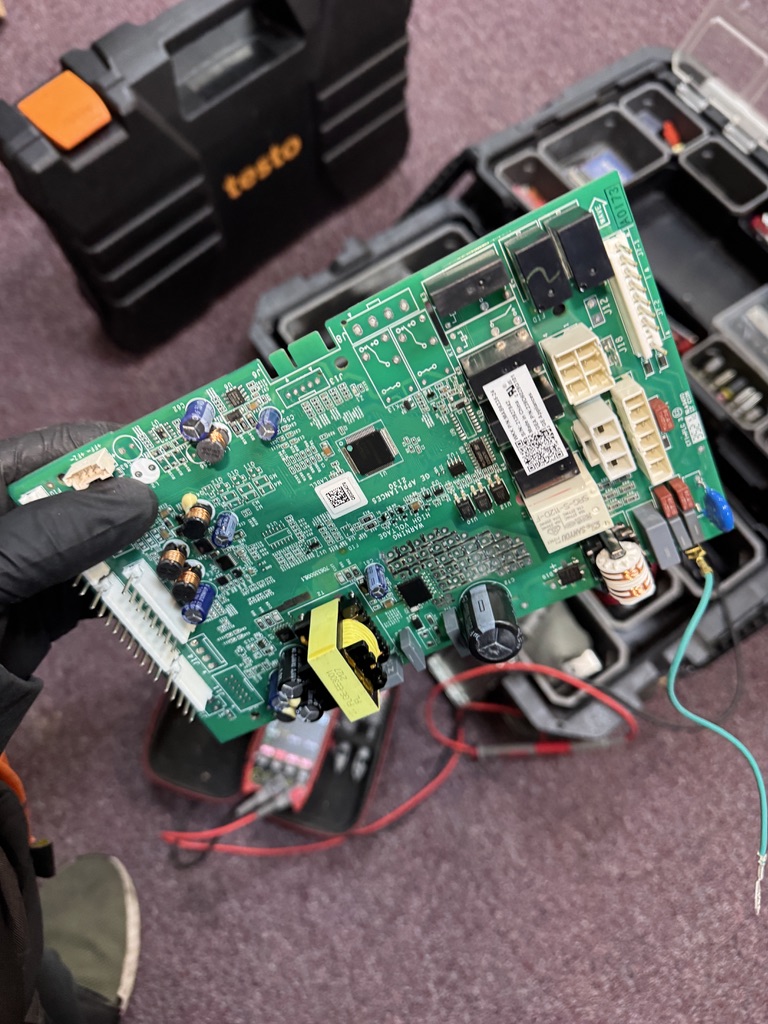
In our GE refrigerator repair in Fairfield, the compressor was not starting. We identified and replaced a faulty capacitor on the existing control board, tested the repair and restored operation. We did not replace the complete board or compressor. That is a useful example of why a non-starting compressor should not automatically become a compressor-replacement quote.
Component-level board repair is not appropriate for every failure. Board damage, component suitability and testing all matter. Extensive sealed-system work, multiple problems or poor overall condition can lead to a different recommendation. Learn about our refrigerator repair service.
Washers: a no-spin complaint is not a replacement order
A washer that leaves clothes wet or does not complete its cycle needs the cause identified. A drive problem and a drain problem can affect cycle completion, but they are not interchangeable: lack of spin does not, by itself, prove a failed drain system.
In this GE washer repair in Napa, we found a worn belt and a contaminated, worn motor pulley. Replacing the belt and motor pulley, followed by diagnostics and clearing stored faults, restored operation. An identifiable drive fault did not require replacing the washer.
For a different washer, extensive bearing, tub or structural problems could change the economics. Our washer repair service starts with the actual fault, not an assumption based on age.
Dryers: fix the heat problem—and consider the airflow
A dryer that runs but does not heat may still have a serviceable drum, motor and cabinet. A failed heating component can be a repair opportunity, but the surrounding condition matters. Replacing a heater without addressing a relevant airflow restriction can leave an important issue unresolved.
Our LG electric dryer case in Napa involved poor drying followed by loss of heat. We cleaned the dryer interior and ventilation channels, replaced the heater assembly and tested operation. The dryer needed maintenance and a repair—not necessarily a retirement party.
If you are considering a different drying technology, compare that option separately. ENERGY STAR explains that heat-pump dryers reuse heated air in a closed-loop process, offering an energy-efficiency advantage over conventional electric resistance drying. Purchase cost, laundry habits, installation and maintenance still matter. See our dryer repair service.
Dishwashers: look beyond a puddle or a dirty plate
Not draining, poor cleaning, leaks or interrupted cycles can have different causes. A specific pump, seal or control fault may be worth repairing when the tub, racks and other systems remain in good condition. Extensive corrosion, several deteriorating components or a replacement that better meets your needs can shift the balance.
A diagnosis should also distinguish an appliance fault from a related installation or drainage issue. Buying another dishwasher does not automatically resolve a problem outside the machine. Explore dishwasher repair before assuming a replacement is the only route.
Ovens and ranges: preserve a good fit when the repair is sensible
A failed heating element, ignition component, sensor or control does not necessarily mean the entire oven or range is beyond repair. For a built-in unit, keeping a suitable appliance can also avoid fit and cabinetry complications.
However, gas and electrical safety take priority over convenience. Extensive damage, unsafe conditions or multiple costly faults require a careful recommendation. Our oven and range service can help identify what has failed and whether repair is a practical option.
Will a new appliance save enough energy to justify replacement?
Sometimes improved efficiency strengthens the case for replacement. It should be a comparison of specific models and your usage—not a blanket claim that a new appliance will quickly pay for itself.
The FTC’s EnergyGuide guidance explains that operating-cost figures are estimates based on typical use and a national average energy price. Your actual cost depends on local rates and how you use the appliance. Compare similar capacities and features, then consider the likely annual savings alongside the full purchase and installation cost.
Repairing an existing machine avoids discarding it immediately, but environmental decisions also include ongoing energy and water use. Neither “repair is always greener” nor “new is always greener” is a useful universal rule.
What to ask before you approve a repair
- What failed, and how was the cause identified?
- Does the appliance have other significant condition concerns?
- What does the estimate include, and what warranty applies to this work?
- Are the proposed parts available, and what timing should I expect?
- Would you still consider this repair reasonable compared with a suitable replacement?
You should not have to make the decision based on an error code alone. A code is a diagnostic clue, not always a part number. And no responsible estimate can promise that an unrelated component will never fail later.
Maintenance matters—but it is not a time machine
Following the manufacturer’s care instructions can help address avoidable problems. Depending on the model, that may include filter care, appropriate loading, checking accessible hoses and keeping required ventilation clear. Maintenance cannot reverse every kind of wear or guarantee a breakdown-free future.
If performance changes—longer drying, unusual noise, incomplete cycles or inconsistent cooling—do not simply normalize the change. An assessment may identify a problem before you commit to replacement. Your appliance does not need to send a formal resignation letter before it deserves attention.
This is a decision guide, not a DIY repair tutorial. Internal electrical work, charged components, heating systems, gas connections and refrigeration systems can present serious hazards. Do not open control boards, bypass safety devices or perform live testing without appropriate qualifications. Stop using an appliance that appears unsafe and arrange qualified assistance.
Before you replace it, see what repair can do
Follow the DNAA Appliance Repair Blog for real service stories, practical maintenance topics and examples of how a targeted repair can preserve an otherwise serviceable appliance. Our cases show what we found and what we repaired—not a promise that every similar symptom has the same solution.
Considering appliance repair or replacement in Napa, Fairfield, Winters, Vacaville, Davis or Dixon? Contact DNAA Appliance Repair to confirm service availability for your address and discuss the next step. You can also explore the linked local service pages for more information.
The bottom line: do not replace a good appliance just because one part failed
An older appliance that has served you well deserves an informed decision, not an automatic trip to the curb. If its condition supports repair, keeping it may be the more practical investment. If the condition and costs point toward replacement, that deserves a clear explanation, too.
Keep what is working. Understand what failed. Decide with the facts.
Before you buy new, know your repair options.
Is your appliance worth repairing? Start with a professional diagnosis—not a replacement order. Tell DNAA Appliance Repair what your refrigerator, washer, dryer, dishwasher or oven is doing. We can help you arrange diagnosis and understand the proposed repair before you decide.
A repairable fault may not need to become a new-appliance purchase, delivery appointment and installation project. Find out what failed first.
Same-day service — subject to availability.
Contact us to check today’s schedule.
Request service online 24/7 or call us.
Request an appliance diagnosisCall (916) 232-3152Online requests can be submitted around the clock. Our team confirms availability and appointment time. This does not mean 24/7 technician dispatch or phone staffing.
Let’s get your appliance working again.
Further reading: FTC: Understanding EnergyGuide labels · ENERGY STAR: Heat-pump dryers · CPSC: Recalls and product safety warnings.