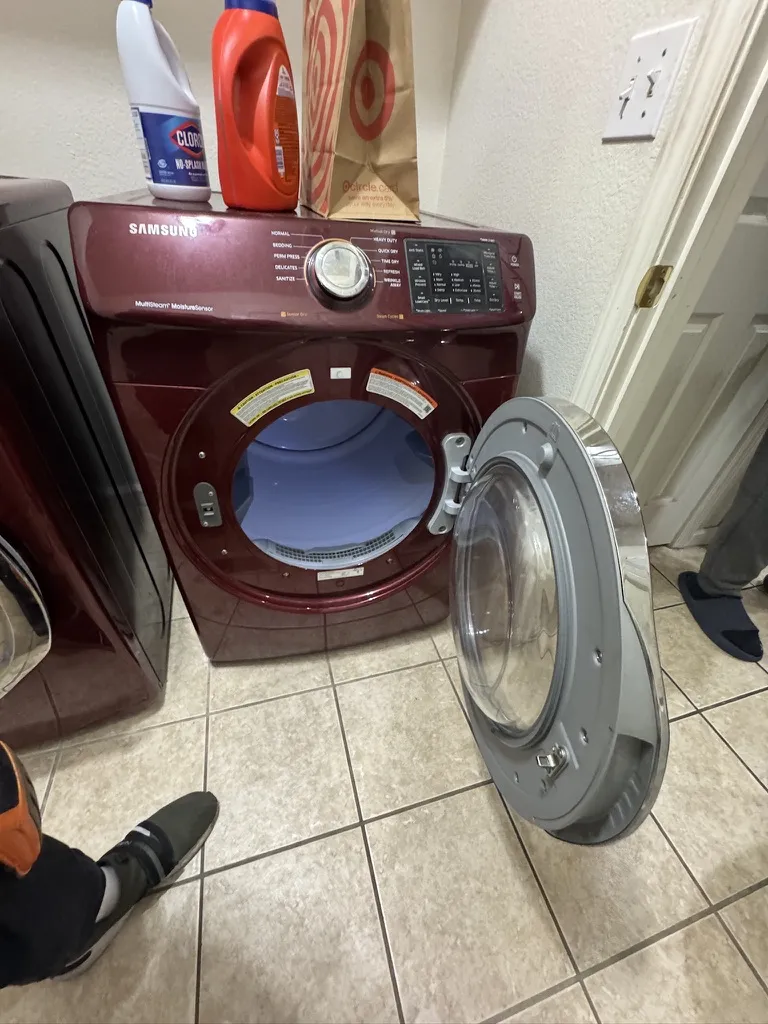
Samsung Dryer Not Heating in Fairfield, CA: Heating Element Replacement & Lint Cleaning
Laundry is supposed to come out of the dryer ready to fold—not ready for another appointment with the dryer. When a Samsung electric dryer stops heating, running the same load again rarely solves the underlying problem.
In this Fairfield, CA repair, DNAA Appliance Repair replaced the heating element in a Samsung DVE45N5300F/A3 dryer and vacuum-cleaned accumulated lint and dust inside the cabinet. The work addressed the failed heating component and the buildup found during disassembly.
Samsung Dryer Not Heating: Symptoms Homeowners Notice
A dryer may switch on and tumble while clothes remain damp or cool. Other homeowners notice unusually long drying times or keep restarting a load that never seems to finish. These symptoms call for diagnosis, but they do not automatically identify a failed heating element.
There is also an important difference between no heat and poor drying with heat. Restricted airflow, an unsuitable cycle setting, electrical supply problems, and faults in the heating circuit can produce overlapping complaints. Samsung’s official drying-performance guidance explains several checks that help distinguish them.
Inside This Fairfield Dryer
Once the dryer was opened and the drum removed, the heater area, blower housing, and cabinet interior were accessible. The photos document the old heating element and the lint and dust present inside the appliance.
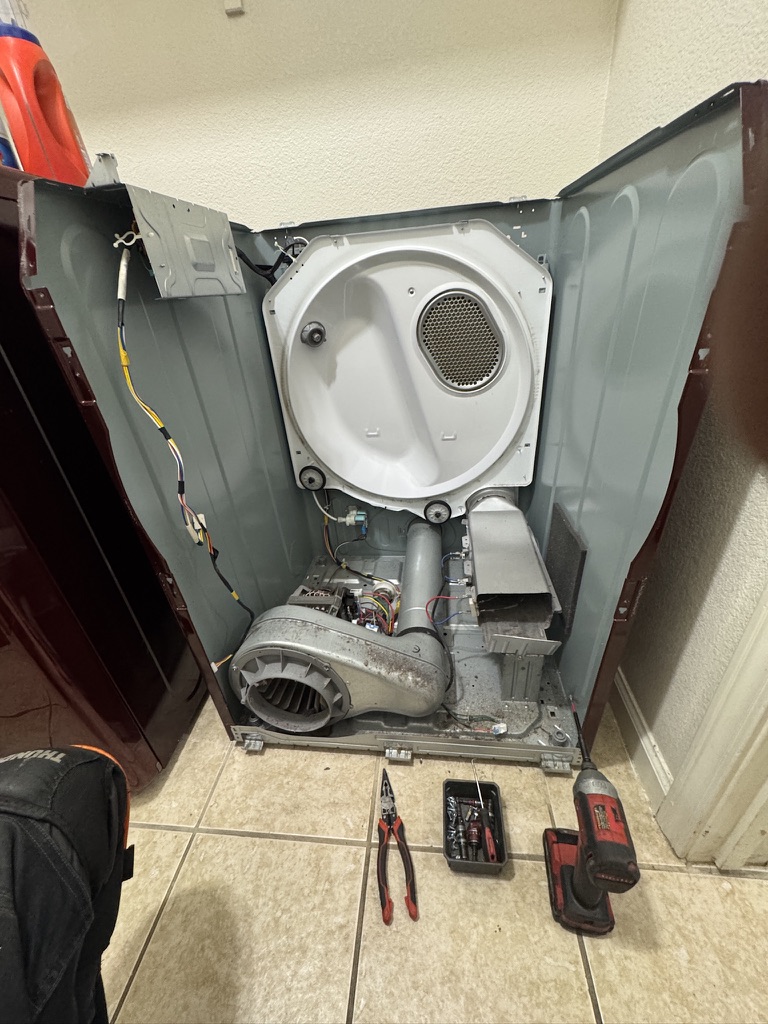
Before cleaning: the opened cabinet provided access to the heater and accumulated lint.
The heating element was the component replaced in this repair. We did not treat the visible lint as proof that it caused the element failure. Buildup deserves attention on its own, while the reason for a no-heat condition must be assessed separately.
The Repair: Replacing the Heating Element
The old element was removed and the replacement installed in the heater housing. This is the component that converts electrical energy into heat; the blower moves air through the heating and drying path. Both heat and airflow matter—having one without the other is not a successful drying system.
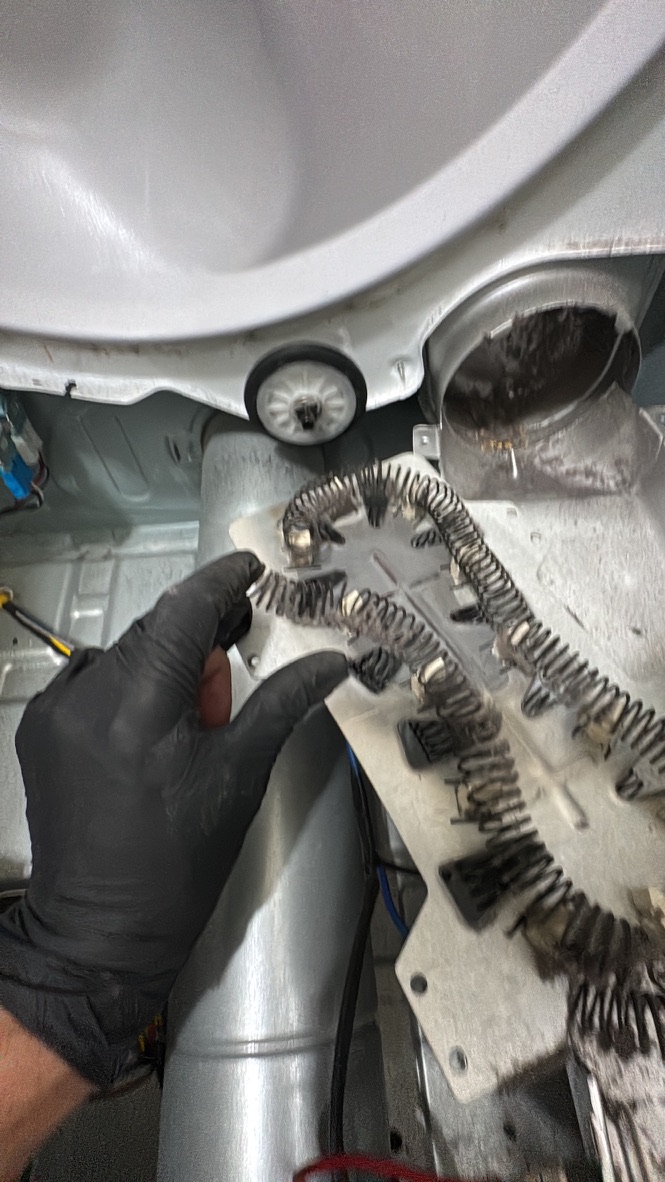
The old heating element during removal.
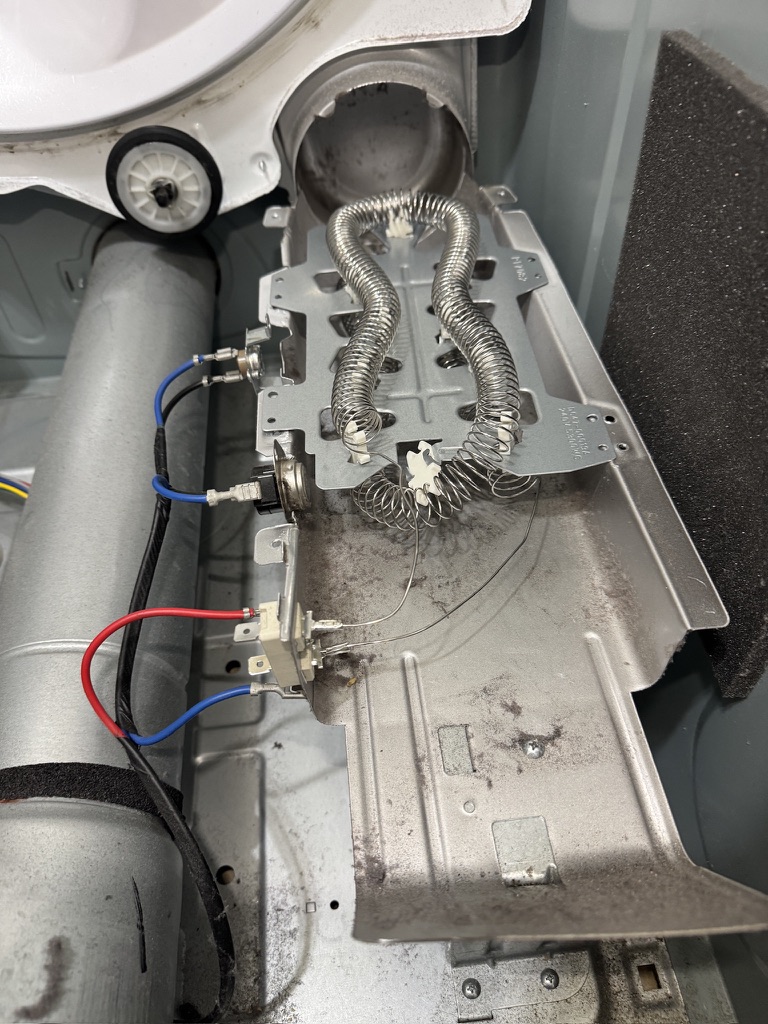
The replacement element fitted in the heater housing during service.
A heater replacement should be based on the diagnosed fault and the correct part for the model, not on the assumption that every Samsung dryer with wet clothes needs the same repair. That distinction helps avoid spending money on a part that does not solve the actual problem.
Why We Also Vacuum-Cleaned the Interior
While the appliance was apart, we vacuum-cleaned accumulated lint and dust from the accessible cabinet interior. Replacing the heater and leaving the surrounding buildup untouched would miss an important maintenance opportunity.
Lint is combustible, and excessive buildup or restricted airflow can create operating and fire-safety concerns. Cleaning helps reduce accumulated material; it is not a guarantee against a future fire or component failure. The U.S. Fire Administration’s dryer safety guidance emphasizes keeping lint filters and dryer vents clean.
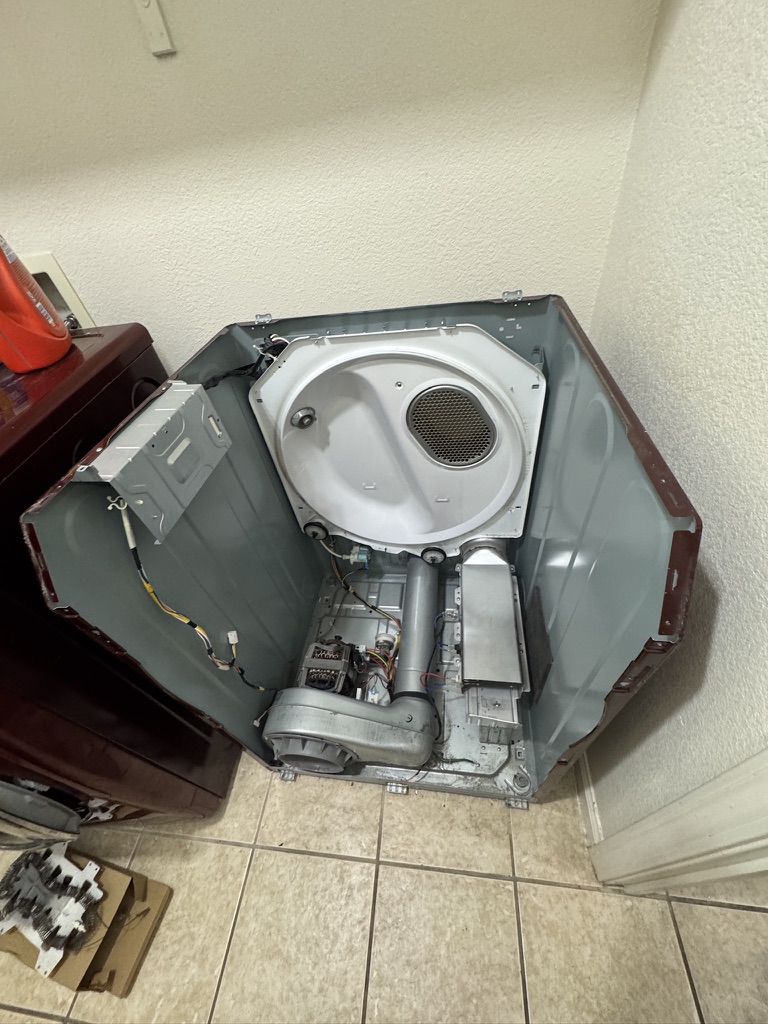
After vacuum cleaning: the accessible cabinet interior before final reassembly.
Internal cabinet cleaning and exhaust-duct cleaning are different jobs. This case documents cleaning inside the dryer; it should not be read as a claim that the full household exhaust duct was cleaned. A clean cabinet does not establish that the duct leading outdoors is unobstructed.
Checking Heat After the Repair
The dryer was reassembled, and a heating check was performed. The final photo shows an infrared thermometer reading of approximately 185°F at the surface being measured during the check. It documents heat being produced after the replacement.
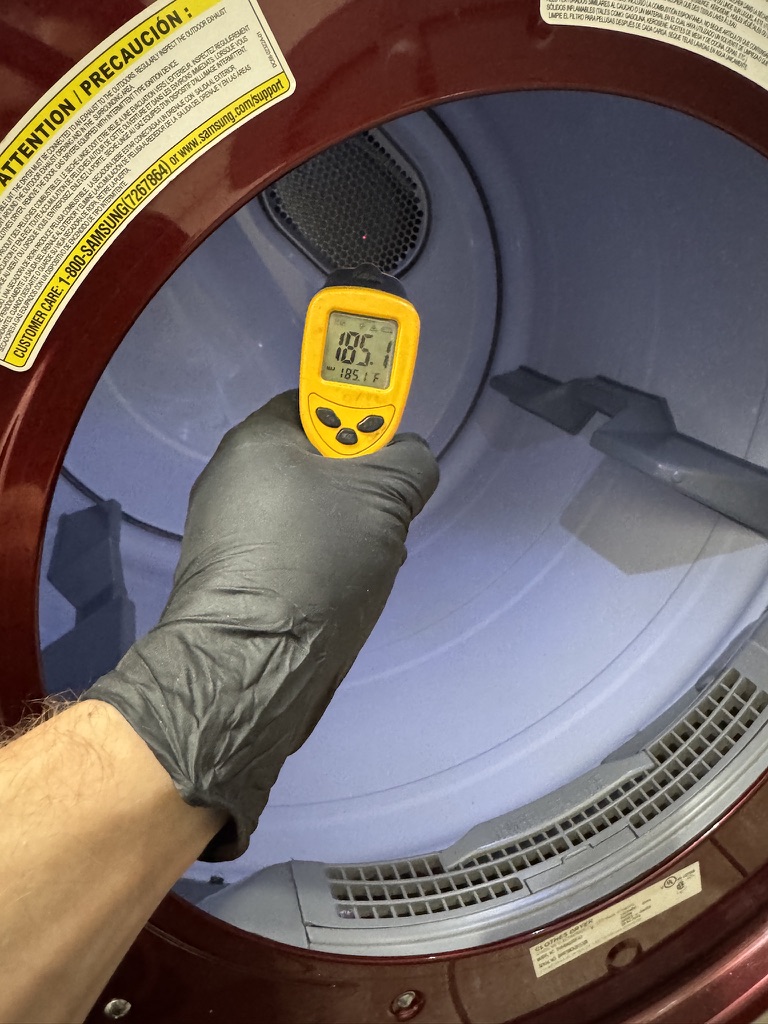
Post-repair heating check. An infrared thermometer measures the targeted surface, not the average air temperature throughout the drum.
That reading is not a universal target for every dryer or cycle, and it does not by itself establish full-load drying time or exhaust airflow. What matters to the homeowner is addressing the heating fault and keeping the entire drying path properly maintained.
A Practical Dryer Maintenance Routine
Clean the lint screen before or after each load. Keep the area around the dryer clear, and pay attention to longer drying times, unusual heat, or a vent cover that does not open properly during operation. Do not ignore a burning smell: stop using the dryer and arrange an inspection.
DNAA recommends an annual professional maintenance assessment to discuss internal cleaning and exhaust-vent condition, with more frequent attention when usage or buildup warrants it. Once a year is a reminder—not a reason to wait if warning signs appear sooner. Internal disassembly and electrical work should be left to a qualified technician.
Repair the Dryer or Replace It?
A failed heating element does not automatically mean the whole dryer is finished. A targeted repair may be practical when the rest of the appliance is in suitable condition. The decision should consider the diagnosis, overall condition, repair estimate, and replacement costs. Our repair-or-replace appliance guide walks through those factors.
For another example of heating-element service, see our Samsung dryer repair case in Winters. Each appliance still needs its own diagnosis.
Samsung Dryer Repair in Fairfield, CA
If your Samsung dryer is not heating, takes repeated cycles to dry clothes, or needs attention for lint buildup, DNAA Appliance Repair can assess the problem and explain the appropriate repair. Tell us what the dryer is doing, whether it produces any heat, and the model number if available.
DNAA Appliance Repair
Professional dryer diagnosis and repair in Fairfield and surrounding service areas. Get a clear explanation of the problem and the recommended next step.
Explore Dryer Repair & Request Service | Call (916) 232-3152
Real repair cases. Hands-on diagnostics. Practical repair options.